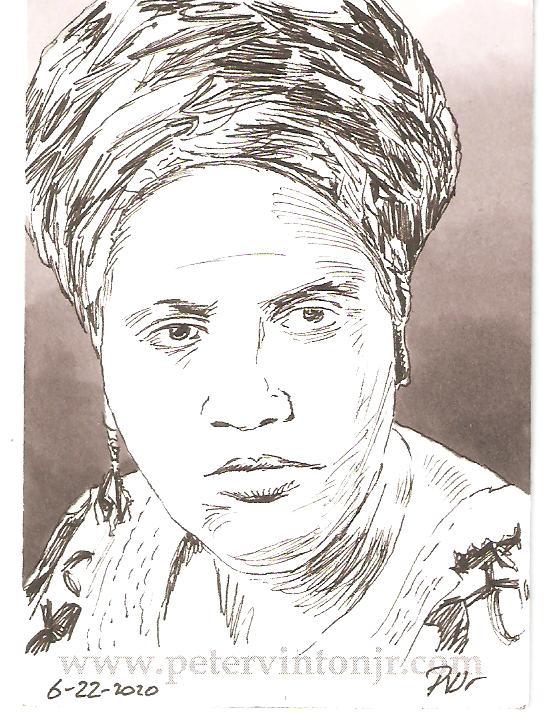
An ongoing illustrative history study
This piece originally posted 6/24/2020
"If I didn't define myself for myself, I would be crunched into other people's fantasies for me and eaten alive."
Born to West Indies immigrant parents and growing up in Harlem in the 1930's, Audre developed a talent for wordsmithing at an early age; as early as the age of four, she overcame a mild stutter by developing a method of literally communicating in poetry --at first appropriating other works, and then writing her own. It would be a springboard to a phenomenally prolific academic career, which included a teaching career at Tougaloo College. Audre produced or published literally thousands of poems, offering a unique vantage point to the civil rights and the feminist movements of the 1960s. One of her most powerful poems, "Power," addresses the emotions swirling around the murder of a black ten-year-old boy by a New York policeman, who is later --big surprise-- acquitted.
Audre also came out as a lesbian during this time period, adding that vantage point to her written output. Her collection of essays "Sister Outsider" is considered one of the definitive works on intersectional feminist theory. A biopic, "A Litany for Survival: The Life and Work of Audre Lorde," appeared on PBS in 1996 --whet your appetite here: http://www.youtube.com/watch?v=diHzbQNyO2k
Next page - Lesson 13: Kitty Black Perkins