An ongoing illustrative history study
This piece originally posted on 08/04/2026
Prelude | 223 | 224 | 225 | 226 | 227 | 228 | 229 | 230 | 231 | Email |
|---|
"God didn't use any different dirt to make me than the first lady of the land."
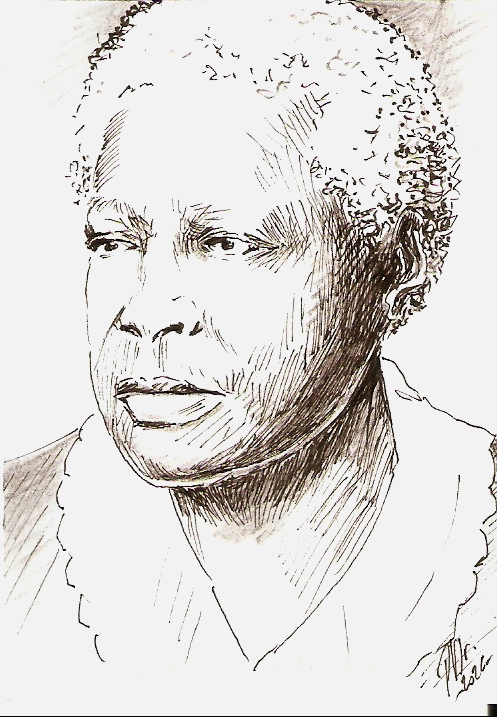
As an educator I couldn't NOT do a bit of a deep dive into the remarkable life of Lucy Craft Laney, which was at once rewarding but also a little disheartening. Born free in 1854 Georgia to formerly-enslaved parents who had been able to purchase their freedom, Lucy was one of those freakishly talented children who was fully literate by the age of four... and translating Greek and Latin texts by the age of twelve. After graduating high school, she enrolled at Atlanta University (which would later be Clark Atlanta University) in 1869, but was discouraged from pursuing her preferred major: the classics, particularly Latin. Instead she secured a teaching degree in 1873 (as was tacitly encouraged of Black women at the time).
After ten quietly-unfulfilling years of teaching in various schools around Georgia, in 1883 she went for broke and chartered her OWN school specifically for Black students, in Augusta: the Haines Normal* and Industrial Institute (named for an early benefactor, Francine E. H. Haines). Later benefactors would include the Presbyterian Board of National Missions, which had turned down Laney's original charter proposal! In its first year the school boasted six students, but by the end of its second year enrollment stood at more than 200. In 1890 the school launched Georgia's first-ever kindergarten for Black children. By 1912 the Haines Institute would employ more than 30 teachers and topped enrollment at 900 students, and its footprint occupied an entire city block. The school curriculum was even expanded to offer a fifth year of College Preparatory courses... one of which was Latin, taught by Laney herself.
Haines broke the mold, in that it established itself as not only an industrial and teaching school but also as an important cultural center; a space where Black students and their families could gather in safety and exchange ideas and creativity. The school hosted many concerts, performances, and guest speakers as it grew --not the least of which included Mary McLeod Bethune (see Lesson #49 in this series), Nannie Helen Burroughs (see Lesson #138), and W. E. B. Du Bois (see Lesson #1). Du Bois in particular then spoke at length about the school during his travels; famously sharing photographs and expounding upon its promise at the 1900 Paris Exposition. Through her and her school's regular association with such trailblazers, Laney became active in the Niagra Movement (forerunner to what would become the NAACP), and was one of the earliest members of the NACW (which has been extensively covered throughout this trading card series). In 1909, President Taft visited the campus and remarked that he had "seen nothing in the way of efficiency and of self-sacrifice that could compare with the work of Miss Laney."
Laney passed in 1933 but her role as a lifelong educator merited her portrait's inclusion in the state capitol building in Atlanta, at the direction of then-governor Jimmy Carter; the first Black woman to be so recognized. At least three Georgia schools are now named in Laney's honor, and one of them, the present-day Lucy Craft Laney Comprehensive High School, is itself constructed around Laney's burial site. The nearby Lucy Craft Laney Museum of Black History was established in 1991 --in fact its 35th anniversary celebrations this year were what brought this incredible lady's work to my attention. I'm only sorry I didn't clue in sooner!
* - In the context of the times, "normal" originated from the French concept of école normale; that is to say, a model school with model classrooms to teach model teaching practices.
Lucy Laney: a clip from the PBS production The Rise and Fall of Jim Crow
Next lesson - Lesson 228: Charles Lenox Remond