Lesson 205:
Florynce "Flo" Kennedy
An ongoing illustrative history study
This piece originally posted on 11/28/2025,
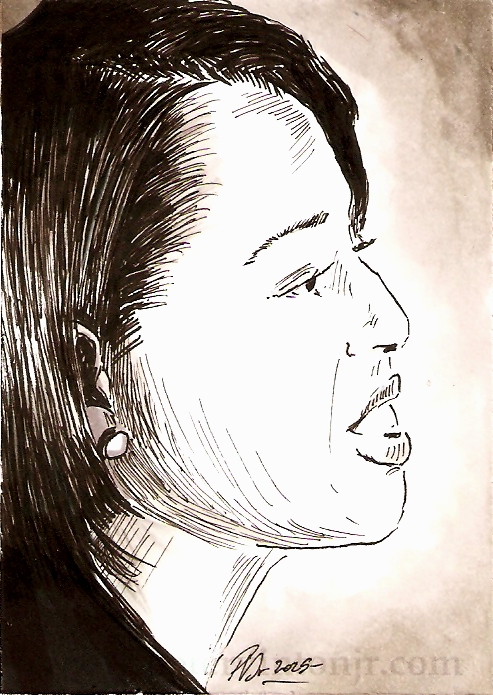
first preceded by my celebration of the Nov. 4 election of Dorcey Applyrs,
incoming first-ever Black woman mayor of Albany, New York
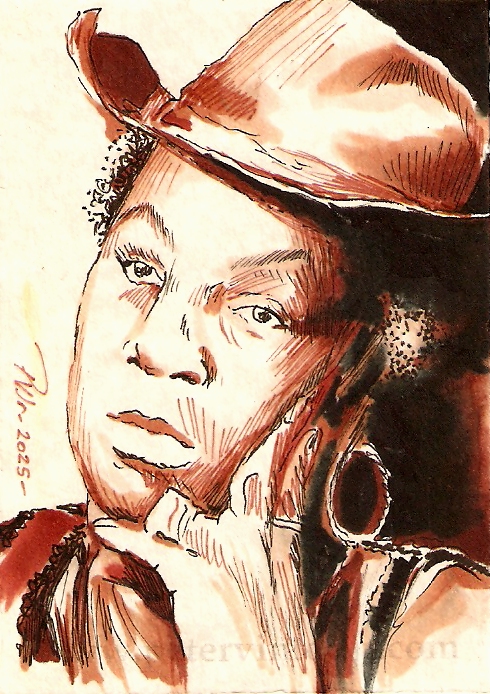 "I'm just a loud-mouthed, middle-aged, colored lady with a fused spine and three feet of intestine missing, and a lot of people think I'm crazy. Maybe you do too, but I never stop to wonder why I'm not like other people. The mystery to me is why more people aren't like me."
The further away we get from the Civil Rights era (and the deeper we get into --well, whatever the hell this era will ultimately be called), the easier it is to overlook the contributions of firebrand activists like lawyer Florynce "Flo" Kennedy. Born in 1916 Kansas City, Missouri as the second of five sisters, Kennedy grew up fully aware of the inherent dangers of white mobs, the long-term damage done by segregation laws, and the effectiveness of unions --her father Wiley had been a Pullman Car porter (see Lessons #68 and #69 in this series for more on this brotherhood). As a child she watched her family face down a mob of outraged whites who resented their having the temerity to move into the neighborhood. It was almost certainly this early exposure that steered "Flo" into a path dominated by social activism --in the 1930s she joined the NAACP and organized a boycott of the local Coca-Cola company for refusing to hire Black employees at its bottling plant. A short time later she and her sister Grayce refused to leave a segregated bus station in Missouri and sustained injuries --including, in Flo's case, a lifelong back injury that never really went away.
After graduating high school (at the top of her class), Kennedy earned her undergraduate degree at Columbia University, and then applied to Columbia Law School but was refused admission. The Associate Dean insisted that Kennedy had not been rejected because she was Black, but because she was a woman. A threatened lawsuit against the Dean promptly followed, and after some back-and-forth, Kennedy was ultimately admitted --the only Black woman in her class. It was a pattern she would continue to apply to many issues in the coming years. She graduated with her law degree in 1951 and started her own practice in 1954. One of her earliest landmark cases was her defense of performer Billie Holliday against drug charges; over the years her clients would also include Charlie Parker, Assata Shakur, and H. Rap Brown. (She also pointedly brought suit against the aforementioned Missouri bus company and received damages!) In 1966, she was one of the earliest members of the National Organization for Women (NOW), and created the Media Workshop to fight media discrimination, famously pushing back against the unspoken-but-obvious exploitations endemic to the Miss America pageant. That same year she took to the stage at an anti-Vietnam war convention in Montreal, to protest the organizers' refusal to allow Bobby Seale to speak. Her background in theater and acting (yeah, did we not mention that part? Seriously, she has an IMDB page) lent itself to a blunt, unforgettable speechmaking style, particularly when she combined it with a refreshingly unconventional dress sense --often accessorizing with a trademark cowboy hat and boots.
In 1971 Kennedy parted ways with NOW and founded the Feminist Party, which endorsed Shirley Chisholm (see Lesson #20 in this series) for President. The Feminist Party also strongly advocated for abortion rights; an issue which was just beginning to gather steam, at that time. At an early abortion rights rally, Kennedy famously remarked, "There is no need for legislation on abortion just as there is no need for legislation on an appendectomy." In May 1973, Kennedy co-founded the National Black Feminist Organization (NBFO), along with Margaret Sloane. Formed to address the double burden of sexism and racism faced by Black women, the NBFO's overall membership peaked in 1974 with 2,000 members over 10 chapters. There was a great deal of overlap with other advocacy groups such as the aforementioned Feminist Party, the Socialist Workers Party, and NOW, and rather than duplicate efforts (and risk diluting the inherent intersectionality), the organization formally folded in 1976.
Flo Kennedy died in December of 2000, at the age of 84. Read an article celebrating her life, written in 1973 by her colleague and lifelong friend Gloria Steinem.
Autobiography - Color me Flo: My Hard Life And Good Times by Florynce Kennedy, Simon & Schuster (1976)
Biography - Florynce "Flo" Kennedy, The Life of a Black Feminist Radical by Sherie M. Randolph, The University of North Carolina Press (2018)
Next lesson - Lesson 206: Minnie Cox
Return to www.petervintonjr.com Main Page